
Automatically translated from Korean. Read the Korean original
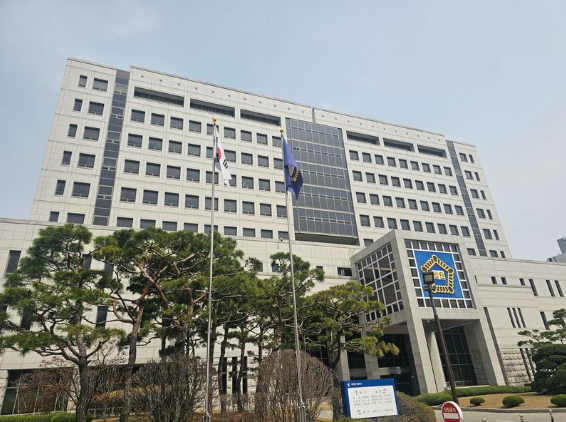
Busan Seomyeon Drinking and Assaulting Police: Practical Response to Obstruction of Performance of Official Duties
The Heavy Legal Reality of Intoxicated Assault Incidents in the Seomyeon Downtown Area
When the weekend passes and Monday morning arrives, many people urgently make inquiries after receiving contact from the Seomyeon district police station or Busan Jin Police Station.
Most appeal their sense of unfairness, saying:
“I was drunk and don't remember the situation at all,” or “The police officer subdued me excessively first, so I was merely defending myself.”
When meeting clients facing Busan Seomyeon drinking and assaulting police incidents, they often treat it lightly at first as a simple dispute involving an intoxicated person,
and only realize the gravity of the situation after learning that charges of obstruction of performance of official duties are applied.
In the past, there was a tendency to give some consideration to mistakes made in an intoxicated state, but recently, internal guidelines of the judiciary and investigative agencies strictly adhere to a zero-tolerance principle.
Because the exercise of physical force against a police officer is regarded as a direct challenge to state public authority, even first-time offenders frequently face formal indictment and must stand in court.
The very first point that must be verified in such cases is not one's subjective memory or sense of injustice, but the existence of objective evidence documenting the scene at the time.
Establishment Criteria and Strict Sentencing for Obstruction of Performance of Official Duties
The crime of obstruction of performance of official duties prescribed under 형법 제136조 is established when violence or intimidation is exercised against a public official performing duties.
This crime is prescribed to be punished by imprisonment for not more than 5 years or a fine not exceeding KRW 10,000,000, so the level of punishment is far heavier compared to general assault.
The most critical part is that it is not an ‘offense unpunishable over objection,’ which cannot be punished if the victim does not desire punishment.
In other words, even if the victim police officer prepares a settlement agreement stating, “I do not want punishment for this person,” the investigation and trial do not stop and proceed to the end.
Furthermore, under the internal guidelines of the National Police Agency, it is a principle that on-scene responding police officers do not enter into private settlements or receive settlement money in obstruction of performance of official duties cases.
An approach like 'it will end once settled with money' as in general criminal cases does not work at all in practical field operations.
Due to the structure of the matter, unless the legal establishment elements are meticulously examined from the initial stage, it has a structure where one inevitably ends up with a criminal record of imprisonment or a heavy fine.
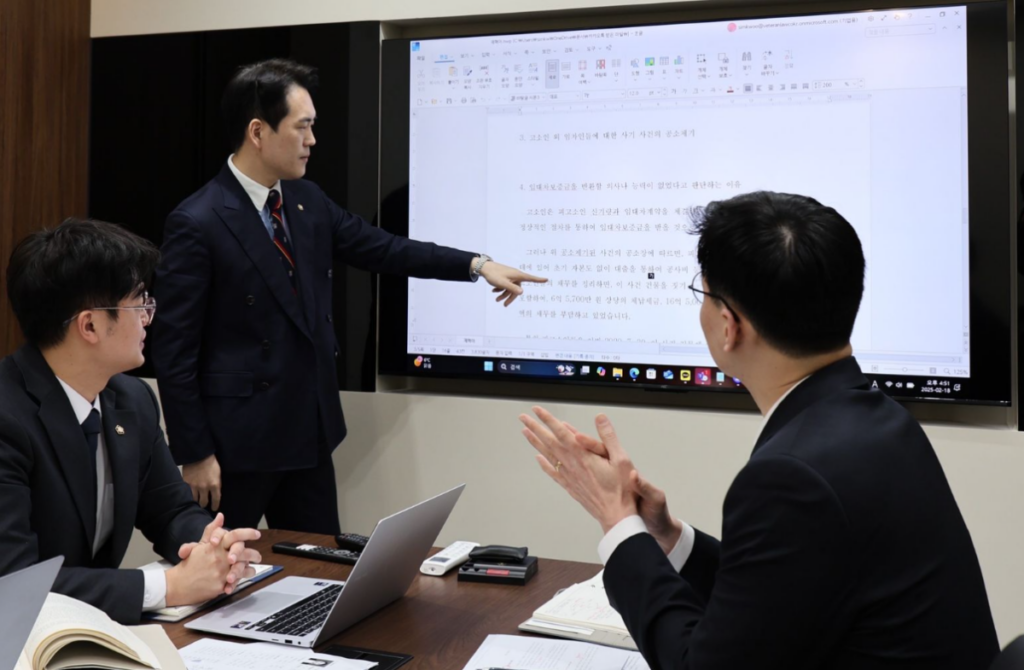
The Reality of the Interrogation Room Disclosed Personally by a Police University Graduate
When I enter the police interrogation room with a client, there are core questions that investigators pose without exception.
Police do not simply ask about whether physical contact occurred, but persistently dig into "whether you clearly knew that the police officer was performing official duties at the time and pushed intentionally."
If flustered during the investigation stage, people inadvertently slip critically unfavorable statements such as, “I knew it was a police officer, but did it because I momentarily became angry.”
In police investigations, a single word or a single nuance in an answer completely shifts the entire direction of a case.
When reviewing statements, the very first part that is corrected is the work of converting 'emotional excuses' into 'legal context.'
Rather than an emotional claim that “The police officer was overbearing,” one must prove through time-by-time analysis of CCTV or bodycam footage that “The physical contact at the time was not an effective exercise of physical force capable of obstructing the performance of official duties.”
Without insider experience in handling actual field cases, it is difficult to see through an investigator's leading questioning intent in advance.
At Veteran Law Firm, attorneys who graduated from the Korean National Police University and accurately understand the mechanics of the investigative process personally provide close assistance and take responsibility to the end, from the initial consultation to accompanying clients to police investigations.
In the police investigation stage, which buttons the first button of a case, the stability of statements increases dramatically merely by having an attorney sit beside the client to block undue pressure.
The Difference in Decision-Making Process Seen Through an Actual Busan Jin Police Station Case
Let me share an actual Busan Seomyeon drinking and assaulting police case that occurred near a drinking establishment in Seomyeon.
The client became involved in an altercation with another intoxicated person while heavily intoxicated, and was arrested in the act after pushing the arm area of a district police officer who responded to the report twice.
The police had applied the charge of obstruction of performance of official duties and forwarded the case to the prosecution with an opinion for indictment.
Outsourced marketing posts exaggerate at this juncture that an unconditional acquittal was obtained, but the practical decision-making process is not so simple.
The parts I considered important while actually proceeding were the context of dialogue in the police officer's bodycam footage, the client's alcohol intake at the time, and the legality of the arrest process.
As a result of analyzing the footage sliced frame by frame, we captured the context that the client reached out hands in the process of losing balance and staggering, rather than clearly perceiving the police officer and assaulting intentionally.
Although the outcome cannot be assumed, such specific circumstantial evidence serves as a decisive element that weakens the establishment requirement of 'intent' for the court.
The court is moved by specific details that target loopholes in the investigation records like this, rather than flashy appeals to emotion.
You can transparently check the specific adjudication trends and successful defense cases of various obstruction of performance of official duties and alcohol-related violence cases in the Busan region that we actually handled through the legal column below.
Go to Veteran Law Firm Busan Successful Cases and Legal Column

Practical Response Measures to Reverse Unfavorable Situations
If objective evidence regarding the Busan Seomyeon drinking and assaulting police charge is clear so that it is difficult to deny intent, one must pivot to a sentencing strategy from that point onward.
Police and judges do not deeply trust letters of reflection or petitions in Internet template forms submitted by suspects.
Instead, there are separate document formats and timings that judges in practice pay special attention to and recognize as genuine.
Rather than merely shouting in words that one will not reoffend, hospital records showing that one began receiving alcohol treatment counseling after the incident, or documents proving that one was normally a diligent member of society, must be submitted.
In addition, even if a private settlement with an individual police officer is refused, one must legally document that one made sincere efforts for victim compensation by utilizing the criminal deposit system.
Depending on what timing and which sentencing materials are clearly introduced during this decision-making process, a case that could end with a fine can be prevented from escalating into a suspended sentence or actual imprisonment.
As initial response is delayed in Busan Seomyeon drinking and assaulting police cases, one becomes trapped within the framework of protocols prepared by investigative agencies, making defense exponentially more difficult.
If you are currently facing a first interrogation or have received a suspect appearance demand from an investigative agency, please do not ponder alone and leave an unfavorable protocol.
Prepare a realistic solution with the assistance of an attorney who sees through the investigative structure and ecosystem of the police organization most accurately from an insider's perspective.
Request a consultation
Use the form to send a consultation request.